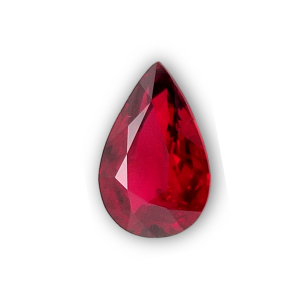
 Rubies, often referred to as “The King of Gems,” are a precious gemstone variety of the mineral Corundum, known for their vibrant red color, primarily due to the presence of Chromium. Interestingly, Rubies and Sapphires both belong to the Corundum family, the key difference being their colour— red Corundum is classified as Ruby, while all other colours, including Blue, are Sapphires. The colour of Rubies can range from Pinkish Red to deep Blood Red, with the most prized shade referred to as “Pigeon’s Blood,” a vivid, pure Red with a hint of Blue. Rubies are highly valued for their beauty, rarity, and durability, ranking 9 on the Mohs scale of hardness, just below diamonds.
As well as the 4 C’s, Geographic Origin & Treatment play a substantial role in influencing the value of a Ruby (As is the case with most coloured gemstones). Rubies from prestigious origins, such as Myanmar (Formerly Burma), are more valuable due to their rarity and superior colour quality. Untreated Rubies, especially those with intense red hues, fetch higher prices than treated stones. Color is the most critical aspect, with the finest “Pigeon’s Blood” Red commanding premium prices. Clarity is also important, though some inclusions are acceptable. Larger Carat weights significantly increase a Ruby’s value, and a well-executed cut enhances the stone’s sparkle and overall appeal.
Origins and Characteristics
Rubies are found in several parts of the world, each region producing stones with distinct characteristics:
- Myanmar (Burma): The most famous and historically significant source of Rubies. Burmese Rubies are known for their intense “Pigeon’s Blood” Red colour and wonderous glow, caused by high levels of Chromium, which absorbs UV light. Rubies from this region, especially from the Mogok Valley, command the highest prices in the market due to their rarity and unparalleled beauty.
- Mozambique: Mozambique has become a major source of Rubies in the last 20 years. These stones often exhibit a rich, vibrant Red colour, with excellent clarity. Whilst their prices were far more affordable than Burmese Rubies, with production slowing, and fine material becoming increasingly rare, their prices have increased significantly in recent years.
- Thailand: Rubies from Thailand tend to have a darker, more Deep-Red hue due to the presence of Iron. Thai Rubies are generally less expensive than Burmese Rubies. The Ruby mines of Thailand were depleted many years ago, so they are still highly valued due to their rarity, especially larger stones.
- Sri Lanka (Ceylon): Sri Lankan Rubies are typically lighter in colour, often exhibiting a Pinkish-Red hue. These stones are highly regarded for their clarity and brilliance, though they generally fetch lower prices compared to Burmese Rubies.
- Madagascar: A relatively new source, Madagascar produces Rubies with a wide range of colours, from Deep Red to Pinkish tones. The quality can vary significantly, but the best stones from this region are comparable in quality to those from Myanmar & Mozambique.
Treatments and Their Impact on Value
Rubies often undergo treatments to enhance their colour and clarity, which can significantly impact their value:
- No Heat Treatment: Non-heated (also meaning non treated) Rubies are exceptionally rare and highly prized. More than 90% of all mined Rubies are Heat Treated, enhancing the colour and clarity of a stone. Unheated Rubies reflect the true beauty of the gemstone as it formed in the earth. This rarity makes non-heated Rubies more valuable, especially when they exhibit desirable traits such as vivid Red colour and good clarity. Collectors and connoisseurs seek these Rubies for their authenticity and uniqueness, usually commanding significantly higher prices than their treated counterparts.
- Heat Treatment: The most common treatment, heating can improve the colour and clarity of Rubies. While heat-treated Rubies are less valuable than untreated ones, they are still considered natural and are widely accepted in the market. Larger, heated Rubies of fine quality can still command very high prices due to their rarity.
- Fracture Filling: Some Rubies, especially those with numerous inclusions, are treated with elements, such as lead glass to fill fractures, improving transparency and appearance. This treatment significantly lowers the value of the Ruby, as it is considered a lower-quality enhancement. Such Rubies must be disclosed as “composite” or “treated” stones and are priced accordingly.
- Surface Diffusion: This treatment involves heating the ruby with chemicals to diffuse color into the surface, which can create a more uniform color. However, this treatment is less stable and can fade over time, resulting in a significant reduction in the stone’s value.
- Synthetic and Simulant Rubies: There are also synthetic Rubies, which are created in a laboratory and have the same chemical composition as natural Rubies. These are less valuable than natural Rubies. Simulants, like Spinel or Garnet, mimic the appearance of Ruby but have different chemical compositions and are much less valuable.
Price Considerations
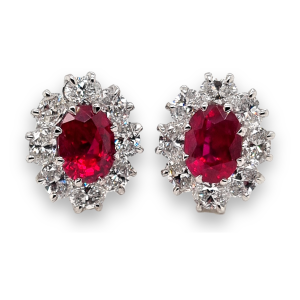 The price of a Ruby is determined by a combination of factors, including color, clarity, carat weight, origin, and treatment. The most expensive rubies are those with intense, pure red color, minimal inclusions, large size, and Burmese origin. Untreated rubies are particularly sought after and can command prices significantly higher than treated stones.
Rubies from less prestigious origins, or those that have undergone significant treatments like fracture filling, are priced much lower, making them more accessible to a broader range of buyers. However, the value of untreated, high-quality rubies continues to appreciate, particularly as they become increasingly rare.
At Aziz Gems, we understand that purchasing a Ruby can be a significant investment, and selecting the right stone can be overwhelming given the many factors involved. All our Gemstones are carefully selected and certificated by the top gemmological laboratories. We are here to guide you through the process, offering personalised advice tailored to your needs and budget. Whether you’re interested in a high-end Ruby investment, something more affordable for everyday wear or you’re curious about the implications of different treatments, we are available for free consultation to help you make an informed decision. We pride ourselves on transparency and integrity, ensuring you receive the best value for your purchase.